

|
LISTEN TO THIS THE AFRICANA VOICE ARTICLE NOW
Getting your Trinity Audio player ready...
|
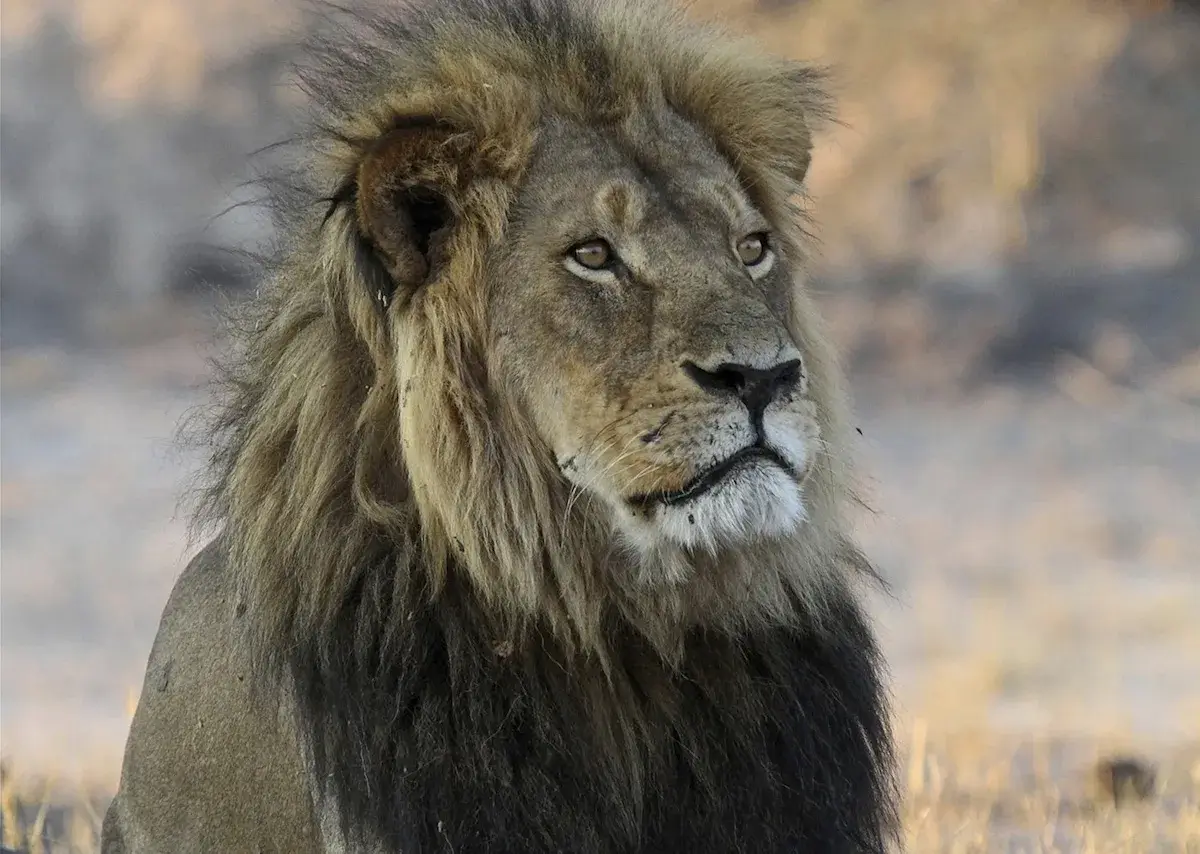
Zimbabwean authorities on Thursday, July 31, confirmed that a collared lion named Blondie, part of a long-running Oxford University research project, was legally killed by a trophy hunter outside Hwange National Park in late June, sparking a wave of outrage from conservationists and renewed comparisons to the killing of Cecil the lion nearly a decade ago.
Blondie, a five-year-old dominant male, was wearing a visible tracking collar sponsored by Africa Geographic when he was shot near the park boundary during the week starting June 29. The Zimbabwe Parks and Wildlife Management Authority stated that the hunt was sanctioned, with rangers present and all legal documentation in place.
“Our rangers were present. All paperwork was in order. Collars are for research purposes, but they don’t make the animal immune to hunting,” said Tinashe Farawo, spokesperson for the agency. He added that hunts often occur at night, which could have made the collar difficult to see.
Africa Geographic, which had helped sponsor the collar for research and conservation, alleges the lion was lured out of the protected area with bait and shot in what it described as a “deeply unethical hunt.”
“That Blondie’s prominent collar did not prevent him from being offered to a hunting client confirms the stark reality that no lion is safe from trophy hunting guns,” said Simon Espley, the company’s CEO. “He was a breeding male in his prime, making a mockery of the… repeated claims that trophy hunters only target old, non-breeding males.”
A photo of hunters posing with Blondie’s carcass circulated briefly online before being deleted, intensifying criticism. The hunt was allegedly organized by Victoria Falls Safari Services. Its co-owner, Mike Blignaut, declined to comment directly, citing guidance from the Zimbabwe Professional Guides Association, but said in a text, “I do wanna assure you, though, that the hunt was legal and conducted ethically.”
Blondie led a pride of three females and ten cubs. His death is reminiscent of Cecil the lion, also part of an Oxford research project, who was lured from Hwange and killed by an American hunter in 2015, a case that sparked global condemnation and calls to tighten trophy hunting laws.
Born Free, a UK-based conservation group, said it was “shocked and saddened that yet another magnificent male lion has been brutally and callously slaughtered by a trophy hunter.”
“This irresponsible activity has no place in the modern world, when wildlife needs all the help it can get just to survive,” said Dr Mark Jones, the charity’s head of policy. “Trophy hunting must be consigned to history.”
Zimbabwe permits the hunting of up to 100 lions a year. The government defends the practice as a vital source of conservation funding, with trophy hunters, mostly foreign tourists, spending up to $100,000 per hunt, including accommodation, transport, and guides.
“This is how people hunt,” said Farawo. “There is nothing unethical or illegal about that for anyone who knows how lions are hunted.”
Zimbabwe is home to an estimated 1,500 wild lions, a third of them in Hwange. Across the continent, wild lion numbers have fallen to around 20,000, largely due to habitat loss, human conflict, and poaching. The species is currently listed as vulnerable by the International Union for Conservation of Nature.









LEAVE A COMMENT
You must be logged in to post a comment.