

|
LISTEN TO THIS THE AFRICANA VOICE ARTICLE NOW
Getting your Trinity Audio player ready...
|
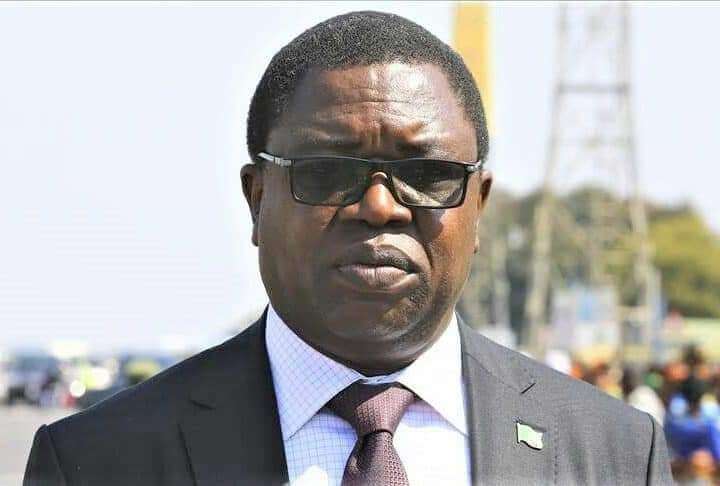
On Thursday, September 4th, 2025, the scene inside the Lusaka Magistrates’ Court offered a sharp image of power unravelled. Joseph Malanji, once Zambia’s top diplomat, a man who shook hands with world leaders and flew to summits in private helicopters, stood motionless as the magistrate read his fate: four years in prison with hard labour.
Known to Zambians as “Bonanza” for his ostentatious generosity and habit of handing out cash at public events, Malanji had been convicted on seven counts of possessing property suspected to be the proceeds of crime. Among the items were two helicopters and real estate worth millions of kwacha, assets prosecutors said bore no relation to his official earnings.
Beside him sat Fredson Yamba, a former treasury secretary under ex-president Edgar Lungu, who was sentenced to three years for approving the transfer of more than $8 million to Zambia’s embassy in Turkey without providing justification.
Magistrate Ireen Wishimanga told the court she had shown “leniency” to both men. They were first-time offenders, and their lawyers had pleaded vigorously for reduced terms. Yet her judgment carried the unmistakable weight of symbolism: a government once defined by extravagance and whispers of graft was now being publicly stripped of its impunity.
The fall of “Bonanza”
For many Zambians, Malanji’s downfall has been riveting. The 59-year-old politician was one of Edgar Lungu’s most trusted ministers, serving as foreign affairs chief from 2018 to 2021. He was also one of the most visible symbols of the Patriotic Front era. His helicopters, his cash handouts, his polished suits, all became shorthand for the excesses of a ruling elite accused of siphoning public money while ordinary citizens bore the brunt of debt and inflation.
“Bonanza represented the arrogance of power,” said a Lusaka-based political analyst who asked not to be named for fear of reprisal. “When you saw him arriving at rallies in a helicopter, you saw what had gone wrong with governance.”
Now Malanji will serve his sentence in a system he once oversaw. Yamba, the technocrat who controlled the state’s purse strings, joins him in prison.
President Hakainde Hichilema, who came to office in August 2021 after defeating Lungu in a landslide, has built much of his credibility on a promise to root out corruption. His United Party for National Development (UPND) swept to power on a wave of anger over economic collapse and allegations of graft under the Patriotic Front.
In the four years since, several former ministers and officials have faced prosecution, though Malanji remains the most senior to be convicted. Hichilema’s government has heralded the cases as proof of seriousness. But critics, particularly within the Patriotic Front, insist the prosecutions are selective, more about dismantling the remnants of Lungu’s power base than building transparent institutions.
The political temperature has only risen since Lungu’s death in June.
A dead president, an unsettled legacy
Lungu, who ruled Zambia from 2015 until his defeat in 2021, died of natural causes in South Africa at the age of 68. Instead of closing a chapter, his death has opened new wounds. His family and the government remain locked in a standoff over funeral arrangements, leaving the former head of state unburied months later.
The Patriotic Front portrays the delay as a mark of disrespect. Hichilema’s allies counter that the dispute is legalistic, involving questions of state protocol and the family’s wishes. Either way, the spectacle of a president’s body lying unburied while his allies face prison sentences has only deepened Zambia’s political polarisation.
The battle over corruption is not just domestic. Zambia’s economy is heavily aid-dependent, and donor patience has worn thin. In May, the United States abruptly suspended $50 million in health-sector funding, citing “systematic theft” of medical donations and declaring it would “no longer underwrite the personal enrichment of fraudsters.”
The suspension rattled Hichilema’s administration, which has sought to rebuild donor confidence after Zambia defaulted on its debt in 2020. Officials promised an investigation, but months later, no prosecutions have followed.
For critics, the episode illustrates the double standards of Zambia’s anti-graft drive: swift convictions for PF-era figures, but silence when corruption allegations touch the current administration. “There is no evidence that the culture of corruption has changed,” said Sishuwa Sishuwa, a Zambian historian and commentator. “What has changed is who gets punished.”
Transparency International ranks Zambia among the world’s most corrupt countries, and its latest report cited weak enforcement, political interference, and lack of accountability in procurement as enduring challenges.
Regional echoes
Zambia’s struggle is hardly unique in Africa. In Angola, former president José Eduardo dos Santos’s family faced investigations over billions allegedly siphoned from state oil revenues, though prosecutions were piecemeal. In South Africa, former president Jacob Zuma’s “state capture” scandal still reverberates in courtrooms and public discourse. In Malawi, former president Bakili Muluzi was embroiled in a corruption case for over a decade, only for it to collapse in 2023.
What distinguishes Zambia is the timing: Hichilema’s government has tried to convince both citizens and donors that accountability is possible in real time, not only after years of delay. Malanji’s conviction offers a potent image of that promise. But the credibility of the campaign hinges on whether the net can extend beyond opposition figures.
For now, Malanji’s supporters are not convinced. They point to the leniency of the sentence, just four years, despite the scale of the alleged crimes, as evidence that the case was more political theatre than genuine reform. If Hichilema wanted to truly end graft, they argue, he would confront corruption within his own ranks.
Magistrate Wishimanga, in handing down her verdict, appeared aware of the broader political storm. She said her judgment was rooted in law, not politics, and stressed that she had considered the defendants’ status as first-time offenders.




LEAVE A COMMENT
You must be logged in to post a comment.