

|
LISTEN TO THIS THE AFRICANA VOICE ARTICLE NOW
Getting your Trinity Audio player ready...
|
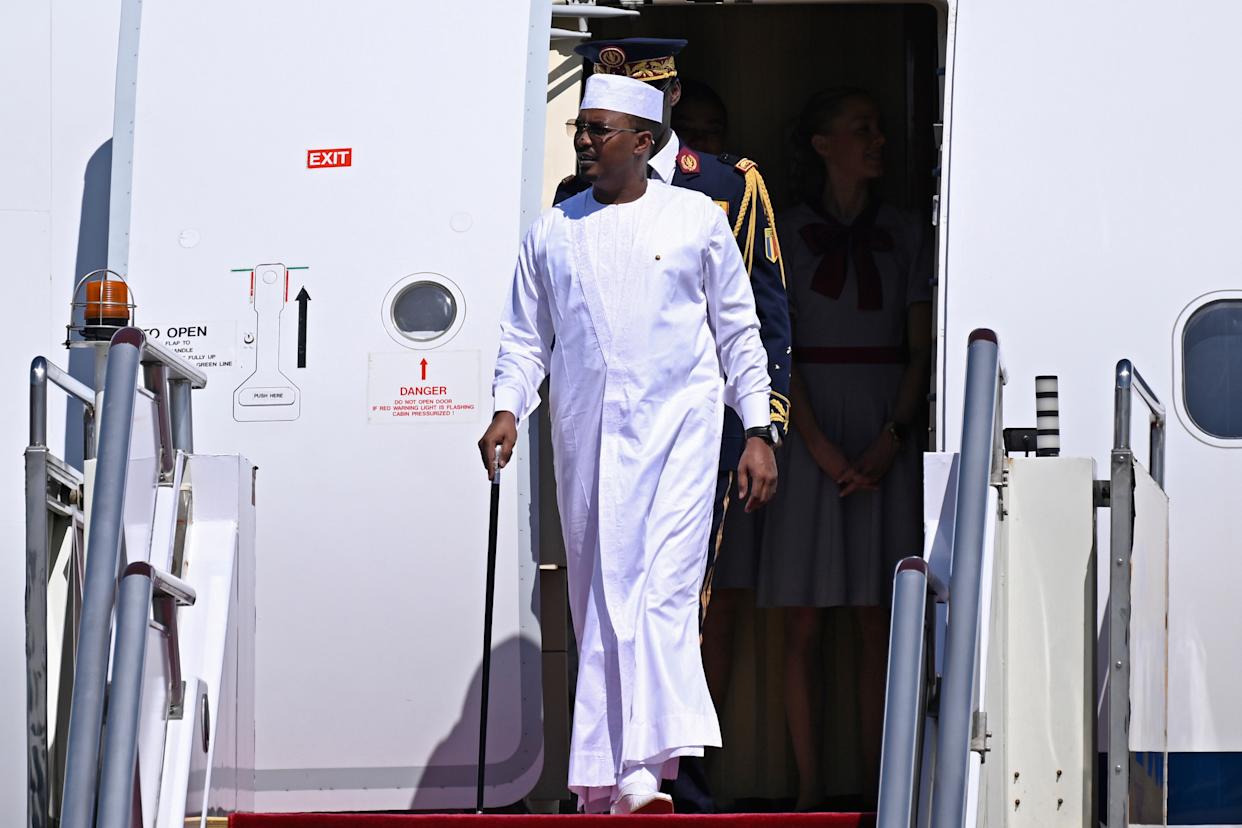
On an otherwise quiet Thursday in N’Djamena, the capital of Chad, President Mahamat Idriss Déby Itno took to Facebook to draw a line in the sand. His message was blunt and emotional: “Chad has neither planes to offer nor billions of dollars to give, but Chad has its dignity and pride.”
His words came in response to a controversial travel ban issued by the United States, a move that includes Chad among a dozen nations whose citizens are now barred from entering the US. In a swift and symbolic act of retaliation, Chad suspended all visa services for US nationals, declaring it a matter of national honour, and reciprocity.
The ban, championed by the US President Donald Trump, has once again thrust Africa into the heart of a heated immigration debate. Of the 12 countries affected, seven are African, making the continent the hardest hit. Starting Monday, June 9, 2025, nationals from Chad, Congo-Brazzaville, Equatorial Guinea, Eritrea, Libya, Somalia, and Sudan will be denied entry into the US altogether. Others like Burundi, Togo, Sierra Leone, Cuba, Laos, Turkmenistan, and Venezuela face targeted visa restrictions.
Trump defended the move in a video posted on X (formerly Twitter), saying, “We will not allow people to enter our country who wish to do us harm.” He left the door open for future adjustments to the list, stating it could change based on “material improvements” or emerging global threats. The White House echoed that sentiment, describing the policy as a set of “common-sense restrictions” to protect Americans from “dangerous foreign actors.”
In Africa, however, the reaction was anything but muted.
Chad’s Foreign Minister, Abdoulaye Sabre Fadoul, expressed shock, particularly at the implication that Chad posed a terrorism risk. “This completely disregards Chad’s commitment and results in this area,” he said in an interview with AFP.
The African Union added its voice to the chorus of concern, urging the US to take a more consultative approach and warning of the potential diplomatic fallout from such sweeping measures.
Somalia, another country affected by the ban, took a more conciliatory tone. Its ambassador in Washington, Dahir Hassan Abdi, said Somalia remained committed to addressing any US security concerns, while also underscoring the value of its relationship with America.
In Eritrea, where authoritarian rule and compulsory military service have forced many to flee, the new US ban has triggered fresh anguish. “As Eritreans, we’ve already suffered under our regime at home, and now we’re facing the same hardship under Trump’s immigration policies,” one man told the BBC, speaking anonymously for fear of reprisal.
Ironically, the incident that Trump cited as justification, a recent alleged terror attack in Boulder, Colorado, involved an Egyptian suspect. Egypt, notably, is not on the list of banned countries.
The White House defended the exclusions by pointing to what it called serious gaps in civil documentation and passport control in countries like Libya, Sudan, and Somalia, all of which are mired in civil conflict. Libya and Somalia were singled out for harbouring long-standing terrorist threats, while other countries, such as Togo and Equatorial Guinea, were flagged for high rates of visa overstays, some reportedly as high as 70%.


LEAVE A COMMENT
You must be logged in to post a comment.