

|
LISTEN TO THIS THE AFRICANA VOICE ARTICLE NOW
Getting your Trinity Audio player ready...
|
For decades, it was the stuff of rumor and fragmented memory, a rarely seen antelope whispered about by biologists and local communities in the wetlands of southern Democratic Republic of Congo. Now, in an extraordinary scientific breakthrough, the Upemba Lechwe has finally stepped out of obscurity and into photographic history.
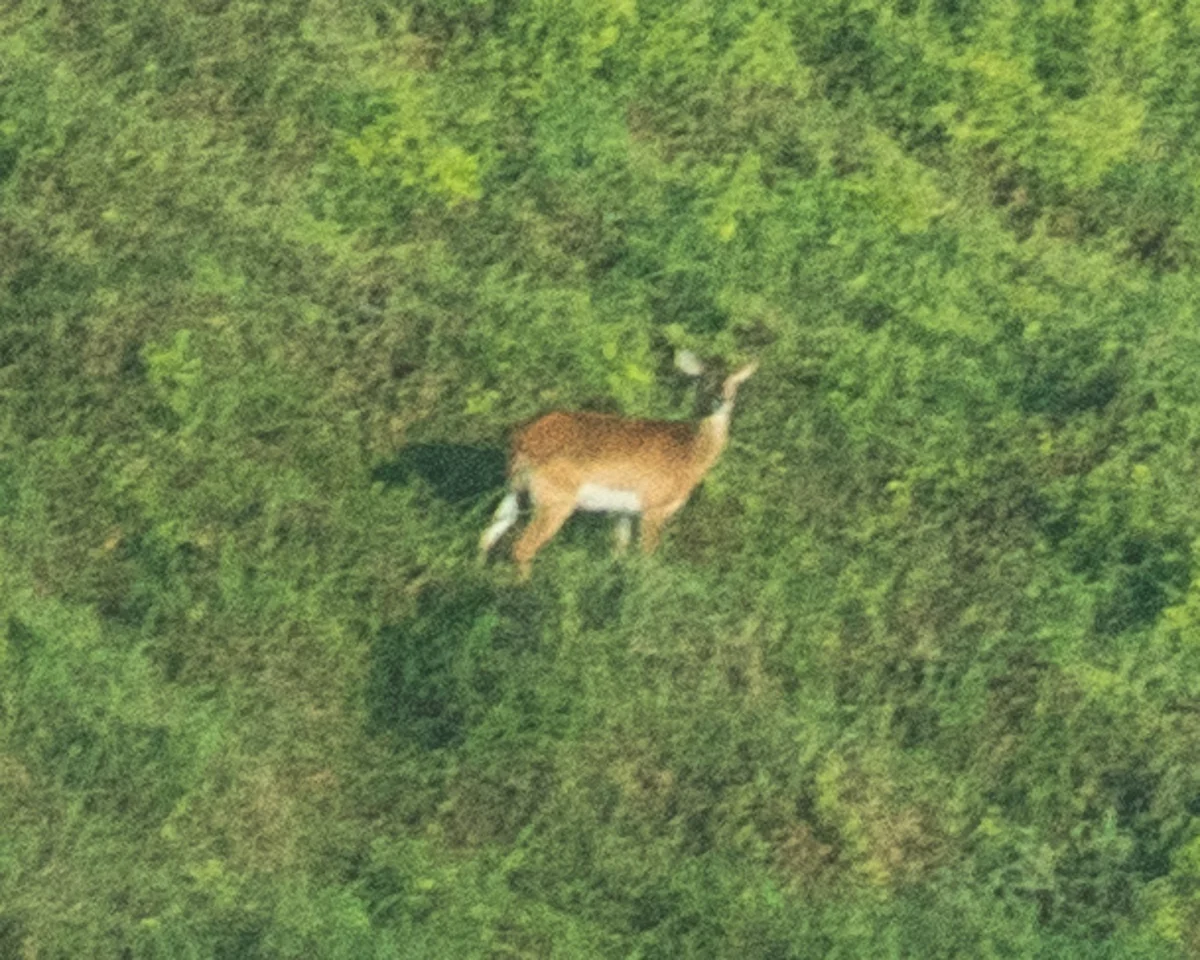
On May 26, 2025, a team of researchers led by conservationist Manuel Weber documented the first-ever photograph of the Upemba Lechwe, a critically endangered and virtually unknown antelope species. The image, taken from the window of a small Cessna aircraft, offers not just proof of life, but a rare glimpse into one of Africa’s most imperiled mammal populations.
“It stood still for just a heartbeat,” Weber recalled, “and then it vanished into the wetlands.” The fleeting moment was enough to change the course of conservation science in the region.
The photograph came as part of an aerial biodiversity survey over the Kamalondo Depression, a remote, swamp-laced basin within the Upemba National Park. Once teeming with wildlife, the region has suffered decades of ecological pressure, with poaching, overfishing, and human encroachment eating away at its fragile balance.
In total, the team counted just ten individual Upemba Lechwe over several days of flying. This low number suggests that the global population may be well below 100, a catastrophic figure for a large mammal species.
What makes the Upemba Lechwe distinct is its subtlety. Unlike other lechwe species, it lacks the characteristic dark bands on its legs and shoulders, giving it a pale, almost ghost-like appearance. This cryptic coloration may have helped it elude scientists for decades, but it also meant that the animal’s status remained uncertain until now.
The last comprehensive attempt to study the species dates back more than 50 years. In the decades since, political instability, limited access, and resource constraints have prevented any focused research on the antelope. “We weren’t even sure they still existed,” Weber admitted. “To not only confirm their presence but also document them photographically, it’s monumental.”
Yet, this rediscovery is shadowed by urgency. In a statement on the Upemba National Park website, Weber called the species “on the very brink,” warning that without swift conservation action, the Upemba Lechwe could disappear entirely within our lifetime.
“Seeing one was a miracle,” he said. “Saving them will require more than miracles, it will require commitment, funding, and a global sense of responsibility.”
The findings, published in the African Journal of Ecology, call for an immediate recovery plan for the Upemba Lechwe, including habitat protection, anti-poaching measures, and local community engagement. Researchers also hope the discovery will revive interest in the broader conservation of Upemba National Park, a neglected yet ecologically rich landscape.
This latest moment echoes a famous conservation image from the DRC: the 2019 photo of gorillas casually posing with a ranger at Virunga National Park. But while gorillas have become symbols of conservation success, the Upemba Lechwe has yet to be embraced by the public or protected by robust policy.












LEAVE A COMMENT
You must be logged in to post a comment.