

|
LISTEN TO THIS THE AFRICANA VOICE ARTICLE NOW
Getting your Trinity Audio player ready...
|
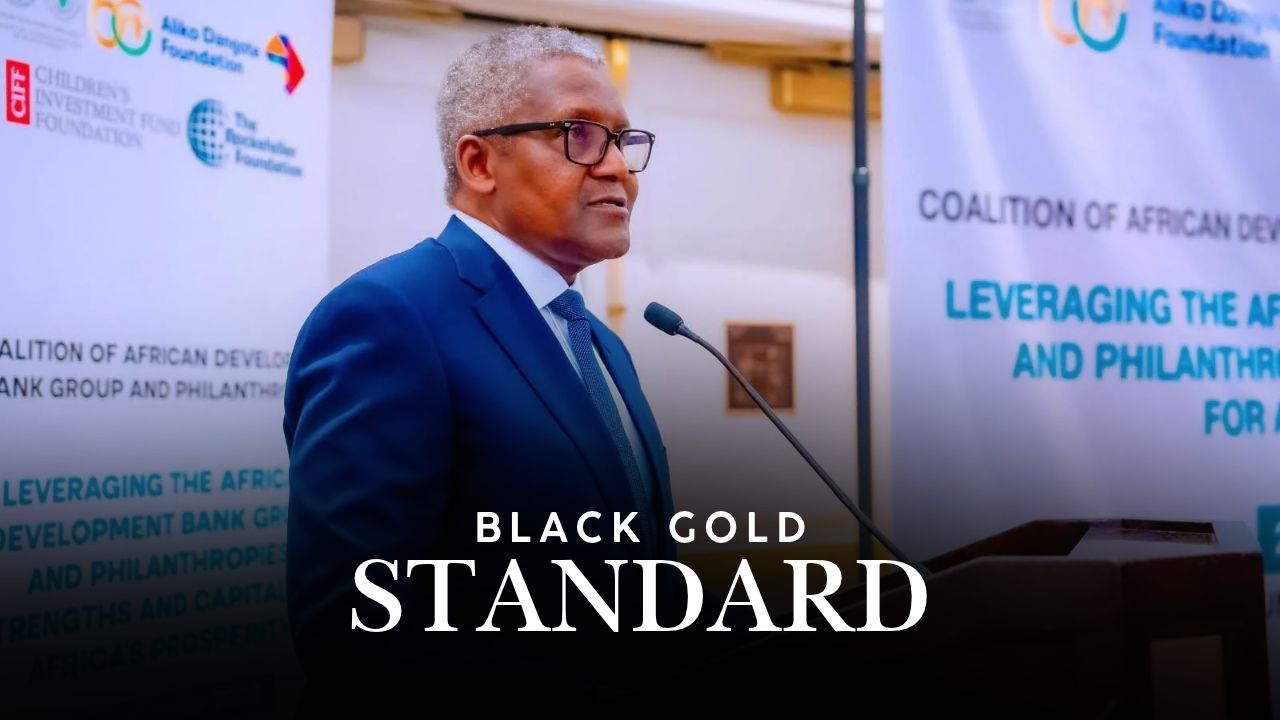
Aliko Dangote has company at the top of Africa’s wealth food chain, but he keeps pulling further ahead.
Forbes counted 23 African billionaires in its 2026 ranking, worth a combined $126.7 billion.
By mid-September, Forbes’ real-time tracker valued Dangote alone at $51.3 billion, as his oil refinery opened to public investors.
Africa’s Billionaire Club Grew 21% Richer in a Single Year
Forbes published its annual Africa list on March 9, using stock prices and exchange rates from March 1.
Together, the 23 added $20.3 billion over 12 months, a 21% rise from 2025.
Vanguard reported that stronger stock markets and steadier currencies drove most of those gains.
South Africa leads with seven billionaires, followed by Egypt with six, Nigeria with four and Morocco with three.
Billionaires from Algeria, Tanzania and Zimbabwe round out the list.
Forbes found that 14 of the 23, or 61%, built their own fortunes rather than inheriting them.
No woman made the 2026 list.
Forbes also leaves out African-born billionaires who live and do business mainly abroad, such as Sudanese-born telecom investor Mo Ibrahim.
Ranked: Africa’s 23 Billionaires, With Dangote Far Ahead of the Field
|
1 |
Aliko Dangote |
Nigeria |
$28.5B (Sept. 14: $51.3B) |
Manufacturing (cement, sugar, refining) |
|
2 |
Johann Rupert and family |
South Africa |
$16.1B |
Fashion and retail (Richemont) |
|
3 |
Abdulsamad Rabiu |
Nigeria |
$11.2B |
Diversified (BUA Group) |
|
4 |
Nicky Oppenheimer and family |
South Africa |
$10.6B |
Metals and mining (De Beers legacy) |
|
5 |
Nassef Sawiris |
Egypt |
$9.6B |
Construction and engineering |
|
6 |
Mike Adenuga |
Nigeria |
$6.5B |
Diversified (telecom, oil) |
|
7 |
Naguib Sawiris |
Egypt |
$5.6B |
Telecom |
|
8 |
Patrice Motsepe |
South Africa |
$4.3B |
Metals and mining |
|
9 |
Mohamed Mansour |
Egypt |
$4.0B |
Diversified (Mansour Group) |
|
10 |
Michiel Le Roux |
South Africa |
$3.8B |
Finance (Capitec Bank) |
|
11 |
Koos Bekker |
South Africa |
$3.6B |
Media and entertainment |
|
11 |
Issad Rebrab and family |
Algeria |
$3.6B |
Food and beverage (Cevital) |
|
13 |
Jannie Mouton and family |
South Africa |
$2.7B |
Finance and investments |
|
14 |
Strive Masiyiwa |
Zimbabwe |
$2.1B |
Telecom (Econet) |
|
14 |
Mohammed Dewji |
Tanzania |
$2.1B |
Consumer goods (MeTL Group) |
|
16 |
Christoffel Wiese |
South Africa |
$1.9B |
Fashion and retail |
|
17 |
Youssef Mansour |
Egypt |
$1.8B |
Diversified (Mansour Group) |
|
18 |
Othman Benjelloun and family |
Morocco |
$1.7B |
Finance (Bank of Africa) |
|
19 |
Aziz Akhannouch and family |
Morocco |
$1.6B |
Diversified (Akwa Group) |
|
20 |
Yasseen Mansour |
Egypt |
$1.4B |
Diversified (Mansour Group) |
|
20 |
Samih Sawiris |
Egypt |
$1.4B |
Services (resort development) |
|
22 |
Femi Otedola |
Nigeria |
$1.3B |
Energy |
|
22 |
Anas Sefrioui and family |
Morocco |
$1.3B |
Real estate (Groupe Addoha) |
Net worth as of March 1, 2026. Source: Forbes Africa’s Richest People 2026. Dangote’s real-time Forbes estimate reached $51.3 billion on Sept. 14.
Dangote Got Rich Making Goods Nigeria Once Imported
Dangote, 69, the world’s richest Black person, started in 1977 as a commodities trader, backed by a loan from his uncle.
Accounts of that loan vary widely, from about $3,000 to roughly $325,000 in 1977 dollars.
He imported cement, sugar, and rice, then decided to produce them at home.
Dangote calls the strategy backward integration, meaning a company builds the supply chain behind its main product.
Government policy rewarded the bet.
In 2002, Nigeria tied cement import licenses to investment in local plants, according to research by political economist Hamisu Salihu.
Nigeria reached cement self-sufficiency in the 2010s and became a net exporter by 2024, Salihu’s work shows.
Critics say that same protection shielded Dangote from competition.
A 2014 profile published by How We Made It in Africa noted that many goods on Nigeria’s import ban lists matched Dangote’s core businesses.
Dangote Cement doubled its profit in 2025 to a record 1 trillion naira, Forbes reported.
Its shares climbed nearly 69% in a year.
Dangote’s Refinery Added $20 Billion to His Fortune in One Day
Dangote’s biggest bet is the Dangote Petroleum Refinery in Lekki, near Lagos.
Built to process 650,000 barrels of crude per day, it now runs at full capacity, The Guardian Nigeria reported.
Before opening its shares to the public on Sept. 14, the refinery raised $2.5 billion in an oversubscribed private placement.
That sale implied a value of about $42 billion, Forbes reported.
Dangote’s stake fell to 87%, yet his estimated net worth jumped by about $20 billion.
FactCheck Africa later clarified that the jump came from the placement’s valuation, not from shares sold on opening day.
Bloomberg, which revalues private assets less often, placed Dangote near $35 billion the same week, Leadership reported.
According to the prospectus, as cited by Forbes, the refinery earned $1.82 billion in net profit in the first half of 2026.
Rabiu and Adenuga Show Nigeria’s Wealth Runs on Staples and Phone Lines
Abdulsamad Rabiu, chairman of BUA Group, posted the year’s largest gain.
His net worth rose 120%, or $6.1 billion, to $11.2 billion, Forbes reported.
Rising BUA Cement shares drove most of that growth, OpinionNigeria reported.
Rabiu now ranks third in Africa, up from sixth a year earlier.
Like Dangote, his group earns much of its money from cement, sugar and other food staples.
Mike Adenuga, worth $6.5 billion, built the mobile network Globacom and the oil marketer Conoil.
Femi Otedola, at $1.3 billion, made his money in fuel distribution and power generation.
He lost about $200 million last year after selling most of his Geregu Power stake below market price, Forbes reported.
South Africa’s Oldest Fortunes Grew From Diamonds and Tobacco
Johann Rupert, Africa’s second-richest person at $16.1 billion, chairs Swiss luxury group Richemont, owner of Cartier.
His father, Anton Rupert, founded the Rembrandt tobacco group that seeded the family fortune.
Nicky Oppenheimer, worth $10.6 billion, comes from the family that ran diamond giant De Beers for most of the 20th century.
In 2012, he sold the family’s 40% stake in De Beers to Anglo American for $5.1 billion.
South Africa’s Truth and Reconciliation Commission found that cheap migrant labor worked to the mining industry’s advantage, and that low African wages cut costs for all firms.
Anglo American, founded in 1917, and Rembrandt, built by Anton Rupert from 1948, both grew under white minority rule, when racial laws shut most Black South Africans out of land and business ownership.
Patrice Motsepe offers a contrast.
A lawyer by training, he bought low-producing gold mine shafts in the 1990s and turned them profitable.
His company, African Rainbow Minerals, anchors a $4.3 billion fortune.
Motsepe also serves as president of the Confederation of African Football.
Newer South African fortunes come from finance, retail and media.
Michiel Le Roux founded Capitec Bank, whose shares rose 57% over the past year, Forbes reported.
Koos Bekker transformed Naspers into a global investor through an early stake in China’s Tencent.
Jannie Mouton built investment group PSG, while Christoffel Wiese grew retailers Shoprite and Pepkor.
Egypt’s Billionaires Built Businesses That Cross Borders
Nassef Sawiris, worth $9.6 billion, built his fortune in construction and fertilizer through Orascom Construction and OCI.
Forbes also noted that he owns a stake in English Premier League club Aston Villa.
His brother Naguib Sawiris, worth $5.6 billion, grew Orascom Telecom into a major emerging-market mobile operator before selling it in 2011.
Samih Sawiris, the youngest brother, develops resort towns such as El Gouna on the Red Sea.
Mohamed Mansour and his brothers Youssef and Yasseen run Mansour Group, a distributor of Caterpillar equipment and General Motors vehicles.
Their three fortunes total $7.2 billion.
Masiyiwa Sued His Own Government for the Right to Build a Phone Network
Strive Masiyiwa’s fortune came out of a five-year legal fight.
In the 1990s, Zimbabwe’s government refused to license his mobile network, Econet Wireless.
Masiyiwa argued that the state phone monopoly violated the constitutional right to free expression.
Zimbabwe’s Supreme Court ruled in his favor, and the government issued a mobile license in 1997, Nehanda Radio reported. Econet launched in 1998, ending the state phone monopoly.
Today he owns 38% of Econet Wireless Zimbabwe and about a third of mobile money firm EcoCash, according to Forbes.
He also holds a stake in Liquid Intelligent Technologies, which runs fiber-optic networks across Africa.
Forbes values him at $2.1 billion.
Morocco, Algeria and Tanzania Add Bankers, Builders and Manufacturers
Othman Benjelloun, worth $1.7 billion, built his fortune in banking through Bank of Africa.
Aziz Akhannouch, worth $1.6 billion, inherited Akwa Group, a fuel and gas distribution business, and later entered politics.
Anas Sefrioui made his $1.3 billion fortune building housing through Groupe Addoha.
In Algeria, Issad Rebrab built Cevital, a food and sugar refining group, into a $3.6 billion family fortune.
Tanzania’s Mohammed Dewji runs MeTL Group, which makes consumer goods across East Africa, and Forbes values him at $2.1 billion.
Kenya Has Wealthy Families, but Forbes Cannot Pin a Billion on One Person
No Kenyan appears among the 23 people on Forbes’ 2026 list.
Rich Kenyans are plentiful, though.
A 2021 Oxfam report counted 1,755 Kenyans worth more than $5 million, Business Daily reported. Their combined wealth equaled 41% of Kenya’s GDP.
Oxfam also found no dollar billionaires in Kenya at the time. Most African billionaire fortunes link to oil, minerals and other commodities, it noted, and Kenya has few in abundance.
Forbes’ method explains more of the gap. The magazine dropped the Kenyatta family from its list after 2011 because it could not name one person in control of the wealth, Business Daily reported.
Forbes had put that wealth above $500 million.
Nation reported the same problem with Manu Chandaria’s family business, Comcraft.
Forbes could not identify a principal custodian of its investments.
Leaked records show where some Kenyan wealth sits.
Panama Papers files linked 191 individuals and 25 offshore companies to Kenya, the Nation reported.
Pandora Papers records later tied seven Kenyatta family members to 11 offshore entities, Finance Uncovered reported.
Offshore companies are legal, and reporters found no evidence of stolen state assets in the family’s holdings. Its largest valued asset was a $31.6 million stock portfolio.
Tax Justice Network estimated in 2020 that wealthy Kenyans hold $4.2 billion offshore, or 4.8% of GDP, The Star reported.
A 2023 follow-up put the annual tax loss from Kenyans’ offshore wealth at $55.7 million.
Each dollar held abroad is a dollar not taxed or invested at home.
Cement, Sugar and Phone Service Built More Fortunes Than Tech Startups
Most of Africa’s billionaires make or sell things people buy every day.
Cement, sugar, fuel, phone service and banking anchor the biggest fortunes.
None of the 23 got rich from a venture-backed tech startup, despite years of investor attention on African fintech.
Many also grew where governments changed the rules.
Nigeria’s import substitution policies favored local manufacturers like Dangote and Rabiu.
Telecom licenses issued in the 1990s and 2000s created fortunes for Masiyiwa, Adenuga and Naguib Sawiris.
Policy can build national industries, as Nigeria’s cement sector shows.
Yet critics argue the same tools can hand protected markets to a few well-connected players.
Dangote’s refinery listing may test a new model.
For the first time, ordinary Nigerian investors can buy shares in the asset behind Africa’s largest fortune.
Whether that spreads the wealth or puts a price on it will depend on how many Nigerians end up holding the stock.
Methodology note: For this analysis, The Africana Voice reviewed Forbes’ 2026 Africa billionaires ranking, Forbes’ real-time wealth estimates, and Bloomberg’s Billionaires Index. Reporting from Nigerian outlets including Vanguard, Leadership, Nairametrics and The Guardian Nigeria added context, along with fact-checking by FactCheck Africa. Background on individual fortunes came from Forbes profiles, company records and African business publications. Political economist Hamisu Salihu informed the section on Nigeria’s cement policy. Net worth figures are estimates that shift daily with share prices and exchange rates. Figures reflect March 1, 2026, unless otherwise noted.



LEAVE A COMMENT
You must be logged in to post a comment.