

|
LISTEN TO THIS THE AFRICANA VOICE ARTICLE NOW
Getting your Trinity Audio player ready...
|
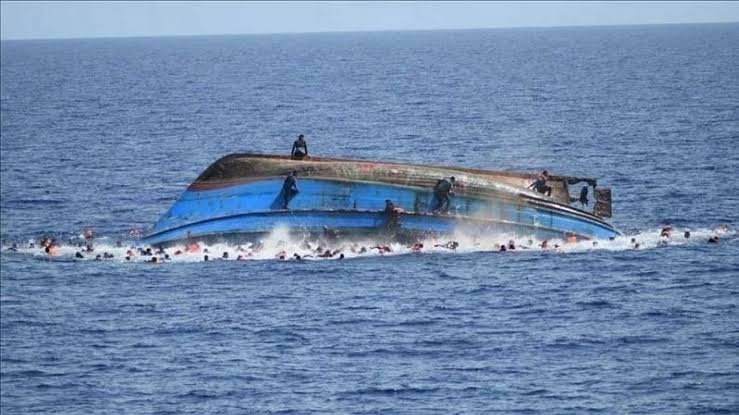
At least 21 people lost their lives after a passenger boat capsized on the River Nile near Shendi in Sudan’s River Nile State on Wednesday, February 11.
The boat, reportedly carrying close to 30 passengers, was travelling between Tayba al-Khawad and Deim al-Qarai on Wednesday evening when it overturned. Women, elderly passengers and children were among those on board. Six survivors were initially reported, while search and recovery operations continued amid fears that more victims could be found.
By Thursday, state authorities confirmed that 21 bodies had been recovered.
Eyewitness accounts pointed to strong waves that destabilised the traditional wooden vessel. But medical professionals and safety advocates say the accident cannot be viewed in isolation from longstanding structural weaknesses in river transport regulation and enforcement.
Regulation gaps under scrutiny
The Sudan Doctors Network, which provided early details of the tragedy, described the accident as a “painful humanitarian tragedy” exposing “the absence of basic safety requirements.” The group called for the deployment of specialised rescue teams and equipment to accelerate search efforts, while urging authorities to take immediate steps to strengthen river transport safety.
Dr Mohamed Faisal Hassan, spokesperson for the network, suggested that weak oversight may have contributed to the sinking.
“Many of the boats operating on the Nile are privately owned,” he told the BBC, adding that regulatory systems and safety enforcement mechanisms remain inadequate. Concerns frequently raised by experts include overcrowding, poor vessel maintenance and the lack of life-saving equipment such as life jackets.
Authorities had not issued a detailed public explanation at the time of reporting.
Essential transport, persistent risks
Across large parts of Sudan, particularly in rural areas, river crossings are a necessity rather than a choice. Limited bridge infrastructure means communities depend heavily on small, locally operated boats to access schools, healthcare facilities and markets.
Traditional vessels, often wooden and minimally equipped, dominate these routes. While affordable and accessible, they are also vulnerable to harsh weather, mechanical failure and overloading.
Sudan has witnessed repeated water transport accidents over the years, a pattern mirrored in other African countries where lakes and rivers serve as key transport corridors. Each incident reignites debate about safety standards, yet meaningful reforms remain slow.
Conflict’s indirect impact
Although River Nile State has largely avoided direct frontline clashes, Sudan’s ongoing conflict continues to strain national capacity. Since fighting erupted in April 2023 between the Sudanese Armed Forces and the Rapid Support Forces (RSF), infrastructure, governance systems and public services have come under immense pressure.
Even relatively stable regions face the ripple effects: weakened regulatory institutions, stretched emergency response services and constrained public resources.
In such an environment, tragedies linked to transport safety become harder to prevent.












LEAVE A COMMENT
You must be logged in to post a comment.