

|
LISTEN TO THIS THE AFRICANA VOICE ARTICLE NOW
Getting your Trinity Audio player ready...
|
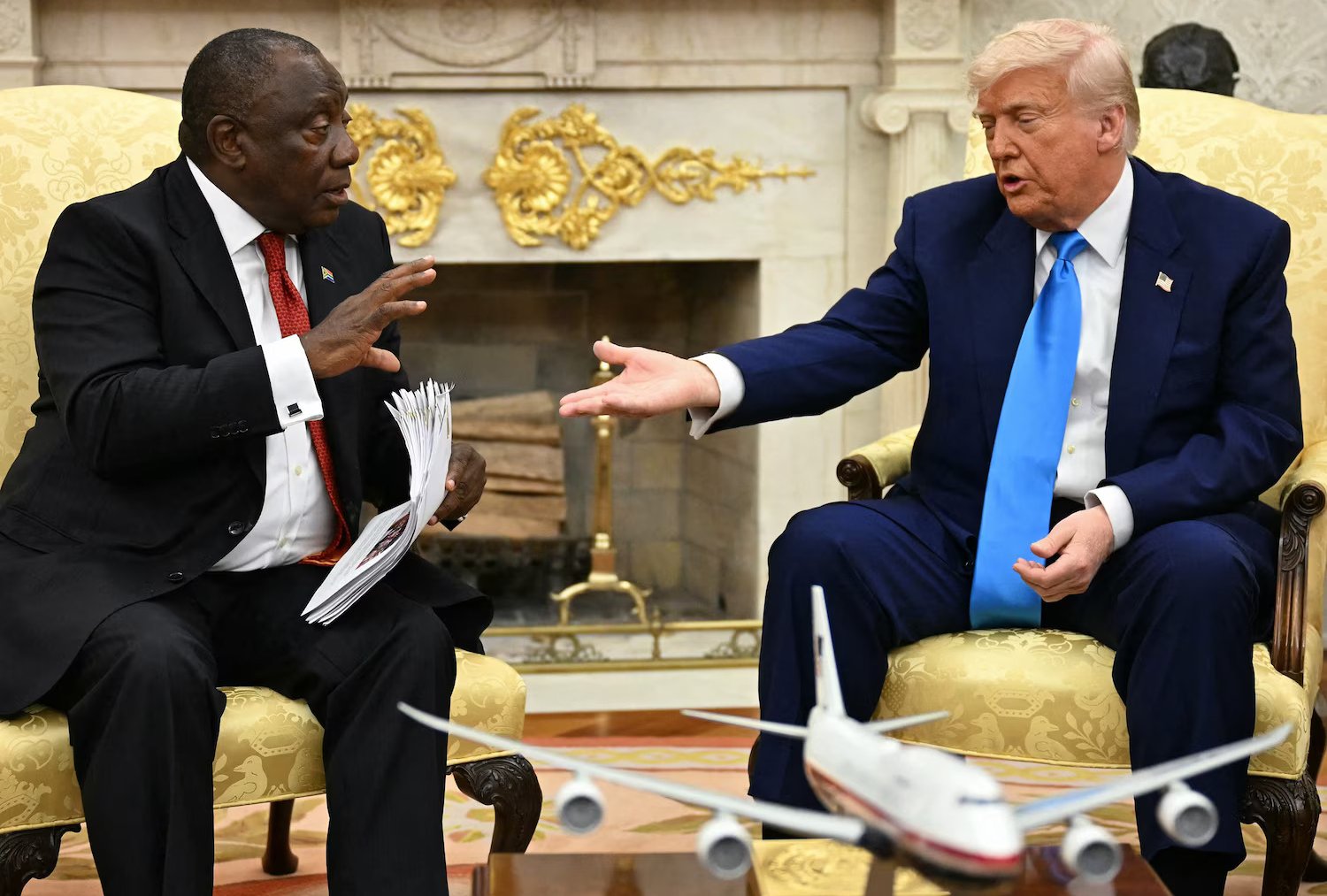
President Donald Trump on Friday, August 1, said South African exports to the United States will face a 30% tariff starting 7 August, the highest rate imposed on any African nation as part of new trade measures affecting countries across the continent.
The decision affects a range of African exporters. Nigeria, Ghana, Lesotho and Zimbabwe will face a 15% tariff. Algeria and Libya, along with South Africa, have been hit with the maximum 30% rate. Tunisia will be subject to a 25% tariff, while Kenya and Ethiopia will be taxed at 10%.
The new tariffs represent a major shift from the preferential terms offered under the African Growth and Opportunity Act (Agoa), a U.S. law enacted in 2000 to encourage trade and investment in African economies. Agoa had allowed duty-free access for eligible countries, including South Africa, whose automobile, agriculture and textile sectors had benefited significantly.
Trump said the tariffs would protect American businesses and jobs from foreign competition. The announcement comes ahead of a scheduled review of Agoa in September.
South African President Cyril Ramaphosa said his administration had “submitted a framework deal” to the U.S. and would “continue negotiating.” He added, “In the meantime, the government is finalising a package to support companies that are vulnerable to the reciprocal tariffs.”
According to information shared by the South African government, the proposed deal had included purchasing U.S. liquefied natural gas, simplifying rules on U.S. poultry imports, and investing $3.3 billion in U.S. industries such as mining.
Some goods are exempt from the new tariffs, including copper, pharmaceuticals, semiconductors, critical minerals, stainless steel scrap, and energy products.
Trump told reporters earlier in the week, “I’ve had a lot of problems with South Africa. They have some very bad policies.” He also indicated he might not attend the G20 Leaders Summit scheduled to take place later this year in Johannesburg, saying he would “maybe send someone else.”
The U.S. president has also halted all aid to South Africa, accusing it of discriminating against its white minority. The South African government has denied the claim.
South Africa Wine, a national industry body, said the announcement placed the sector at a “severe disadvantage” compared to competitor countries with lower tax rates. The U.S. is South Africa’s fourth-largest wine export market.
The association urged both governments to “intensify efforts to resolve this matter swiftly to avoid long-term harm to trade, investment and jobs.”
Reactions from other affected countries varied. Kenya’s trade ministry welcomed the 10% rate, saying it remained “committed to deepening its longstanding trade and investment” with the U.S. and would continue to engage to “safeguard and grow the historical trade ties that have benefited both our countries.”
In Lesotho, Trade Minister Mokhethi Shelile expressed concern over the 15% tariff, stating the textile and garment industry “will not be able to compete at all.” Lesotho had earlier been threatened with a 50% tariff.
TZICC, a garment factory producing for U.S. companies such as JC Penney, Walmart and Costco, said the 15% rate “still affects our orders and buyers.” The country’s textile sector, its largest private employer, has already been affected by uncertainty around Agoa and the tariff threat, with some factories reducing staff or closing down.

LEAVE A COMMENT
You must be logged in to post a comment.